Audio playback
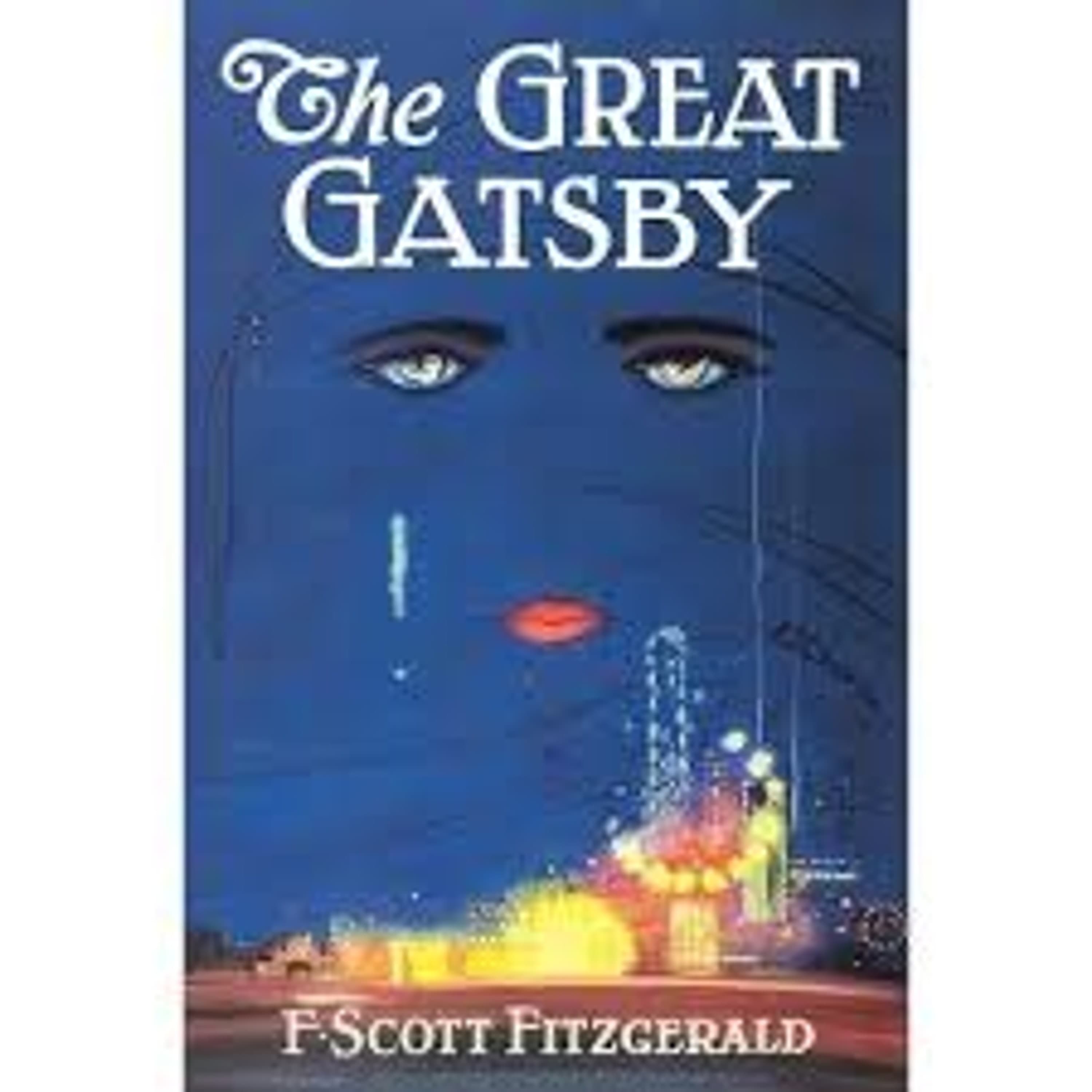
Women of Gatsby
Is this your podcast and want to remove this banner? Click here.
Chapter 1
Daisy Buchanan: Beauty and Disillusionment
Eric Marquette
Daisy Buchanan, in Fitzgerald’s *The Great Gatsby*, is often seen as the epitome of wealth and charm—as if she herself embodies the American Dream. But I I think there’s this deeper tension beneath her allure. She’s not only captivating but also, well, elusive in a way that feels almost... deliberately ungraspable.
Ruby Sturt
Right, and what's really so fascinating to me is how she kinda blurs the line between victim and villain, doesn’t she? Like, she’s trapped by societal expectations, but then also totally complicit in some pretty horrible stuff.
Eric Marquette
Exactly. She's, in many ways, a product of the values of her time. The focus on wealth, privilege—
Ruby Sturt
And appearance, yep!
Eric Marquette
Absolutely. There’s this obsession with the facade. Daisy’s sparkling charm almost acts as a smokescreen for her emotional weakness—or perhaps her indifference. I think Fitzgerald layers this in intentionally to, sort of, critique the hollowness of upper-class society, wouldn’t you say?
Ruby Sturt
Totally. I mean, the way she shrugs off some of the book’s...um, heavier moments—it’s just, ugh! Frustrating, right? But then again, isn’t that sorta the point? She's not supposed to feel redeemable.
Eric Marquette
And yet, you can't help but—
Ruby Sturt
Feel for her a little?
Eric Marquette
Precisely. There’s that duality in her, which adds so much complexity to her character. She’s trapped between love and security, rebellion and convention.
Ruby Sturt
You know, when I first read the book, I was, like, 16 or something—and Daisy just, wow, completely messed with my head. It was one of those moments where I realized, "Oh, unreliable narrators are a thing! And maybe even the characters themselves can be unreliable, too."
Eric Marquette
That’s such a great point. She embodies contradiction, doesn’t she? Take her relationships, for instance. In them, you see this unsettling mix of affection, self-interest, and societal pressure.
Ruby Sturt
Oh, for sure. And the way she just—and I mean just—chooses Tom over Gatsby. It’s like, is she protecting herself, or is she, y’know, too frightened to dream beyond what she knows?
Eric Marquette
I’d argue it’s both. There’s this remarkable fragility in her character, but it also intertwines with a strength that’s rooted in pragmatism, if we can call it that. It makes Daisy one of literature's most, hmm, enduring enigmas. And that’s what makes her fascinating. She's so much more than—
Ruby Sturt
Just a pretty face?
Eric Marquette
Exactly. More than the glamorous aura or her golden voice, she represents the tension between what’s promised by wealth and what it fails to deliver. That disillusionment is her real story.
Chapter 2
Jordan Baker: Independence in the Jazz Age
Ruby Sturt
Okay, so shifting gears a bit—Jordan Baker. If Daisy is all about the tension between what society expects of her and her own choices, Jordan’s like, the flip side of that coin. She’s, I mean, just this total icon of independence. A woman making her name in professional sports during the roaring twenties? That’s pretty bold for the time, right?
Eric Marquette
Absolutely. Jordan stands as a remarkable figure—a professional golfer navigating a world where women were largely relegated to traditional roles. Her independence, I think, wasn’t merely a personal choice; it was a statement against the societal norms of the Jazz Age.
Ruby Sturt
Yeah! And she’s not just independent in her career, but also in the way she, like, carries herself. There’s this cool detachment about her, you know? Like, she's there in Gatsby’s world, mingling with all these elites, but she doesn’t totally, um, conform to them.
Eric Marquette
Exactly. That sense of autonomy is fascinating. Even her relationships show that. Take her involvement with Nick—
Ruby Sturt
Or lack of involvement?
Eric Marquette
Fair point. She keeps things deliberately distant, perhaps as a way of safeguarding her independence. She doesn’t want to be tied down—either by societal expectations or by someone else’s demands.
Ruby Sturt
It’s kinda refreshing, really. Women in that era were supposed to be, like, perfect little homemakers or whatever, and here’s Jordan, out there dominating the golf course. Like, talk about flipping the script.
Eric Marquette
Indeed. I once attended a women’s sports event—it was a tennis match, actually—and I remember being struck by the way these athletes defied stereotypes. Watching them, I couldn’t help but think of characters like Jordan, who, in many ways, paved the way for such moments of empowerment.
Ruby Sturt
Ooh, I like that! And the thing with Jordan is that she’s not concerned with being liked—she doesn’t feel the need to, like, apologize for her ambition. That’s powerful.
Eric Marquette
Absolutely. Yet, she’s also enigmatic. Her independence comes with a certain... aloofness, perhaps even cynicism, which makes her a bit difficult to read. But isn’t that what makes her so compelling?
Ruby Sturt
Totally. She’s one of those characters who doesn’t fit neatly into a box, right? And I think that’s why she’s such a standout in a book full of people who are, like, defined by their wealth or their relationships.
Eric Marquette
Precisely. Jordan embodies modernity, individuality, and the complexities of stepping beyond societal boundaries. She’s not just a symbol of independence—
Ruby Sturt
She is independence itself.
Chapter 3
Myrtle Wilson: Ambition and Tragedy
Ruby Sturt
So, while Jordan Baker’s story is all about strength and independence, Myrtle Wilson’s, I mean, her story is just... tragic, right?
Eric Marquette
It is, undeniably. She’s this incredibly tragic figure, emblematic of the dangers of chasing an illusion of upward mobility—especially for a woman constrained by class.
Ruby Sturt
Totally. And the thing is, she’s not, like, passive about it either, you know? She actively tries to rise above her situation through her affair with Tom. But it’s almost like Fitzgerald was saying, "Nope. Women like Myrtle don’t get to break free."
Eric Marquette
Yes, and therein lies the tragedy. Myrtle’s ambition—her desperate yearning to escape her lower-class life—drives her decisions, but it also makes her vulnerable, placing her fate at the mercy of people like Tom, who, if we’re being honest, never really saw her as an equal.
Ruby Sturt
Exactly! It’s like she’s trying to play this game that’s completely rigged against her. And you can see that in the way Tom treats her—as this, I don’t know, accessory? Not as a real partner.
Eric Marquette
That’s a precise way of putting it. Their relationship embodies the imbalance of power and status. Tom, with all his wealth and privilege, could indulge in the affair without consequence. But for Myrtle, the stakes were life-altering.
Ruby Sturt
Right, and it’s not just gender—it’s class too, isn’t it? Like, Tom’s wife, Daisy, even though she’s not exactly happy, she’s still untouchable because of her status. Meanwhile, someone like Myrtle? She’s just... disposable.
Eric Marquette
Precisely. Fitzgerald not only critiques the inequalities of gender but also the broader class system of the 1920s. And Myrtle’s death—it feels almost inevitable in the context of the world she inhabits. A tragic end for someone who dared, unwisely, perhaps, to dream of more.
Ruby Sturt
Yeah, that part just absolutely guts me every time. And it also kinda reminds me of that story from the same era—I dunno if you’ve heard of her, but Evelyn Nesbit?
Eric Marquette
Ah yes, the infamous "Girl in the Red Velvet Swing," associated with Gilded Age scandals and social climbing. There are definite parallels.
Ruby Sturt
Yeah, like, she was also this woman who tried to navigate her way through a male-dominated world by, you know, aligning herself with powerful men. And, spoiler alert, it also didn’t end super well for her. I mean, women like her—and Myrtle—they were kind of set up to fail, huh?
Eric Marquette
Very much so. Their stories reflect a societal double-bind: ambitious women were punished for stepping outside their "place," while those who conformed were trapped by convention. It underscores this systemic injustice that defined the era.
Ruby Sturt
And what makes it even more heartbreaking is that Myrtle’s dreams weren’t huge, right? Like, she just wanted to escape her bleak life with George Wilson. She wasn't trying to overthrow society or anything.
Eric Marquette
Exactly. Her aspirations were modest, yet even those were unattainable given her circumstances. Her story feels like a cautionary tale, doesn’t it?
Ruby Sturt
It really does. And the way Fitzgerald, like, writes her fate—it’s this huge, loud, awful moment that’s impossible to ignore, but the characters just... move on. Like she was never really there.
Eric Marquette
A stark reminder of how society so often discards women like Myrtle—those who dare to want more, only to be silenced when they don’t fit the prescribed mold.
Ruby Sturt
It’s heavy, for sure. But it’s also why Myrtle’s story is still worth talking about today, huh? She might be fictional, but... she’s so real in a lot of ways.
Eric Marquette
Absolutely. She serves as a mirror to both the injustices of the 1920s and the persistent inequalities we still grapple with. And on that note, I think her story leaves us with a lot to reflect on.
Ruby Sturt
Totally. And, honestly, her story feels like the perfect spot to wrap up our discussion of the women in *The Great Gatsby*. Such a powerful way to end.
Eric Marquette
Indeed. Well, that’s all for today, everyone. Thank you so much for joining us on this journey through Fitzgerald’s world. Until next time!